Search This Blog

Showing posts with label centrism. Show all posts

Wednesday, December 15, 2010

A Scathingly Bipartisan Editorial


I try to keep Blognoscor apolitical most of the time, but the whole blogosphere is doing a thing where we all get on and gripe about the tax compromise going through the Senate in the morning.  Anyway, apparently I didn’t get the email and I didn’t realize we were doing it until I got home and I had the only blog not complaining about this legislation.  It was like showing up bare headed on hat day… so embarrassing.

Anyway, I threw this together kind of quickly.  I’m far-center politically and thus have no horse in the race.  I also know that I have both conservative and liberal readers so I’ve tried to keep the griping fair to everyone.  When you encounter parentheses, read the option on the left if you are a Democrat and the right if you are a Republican.  This way we can all enjoy being unhappy with the compromise together.


(Democrats | Republicans) Cave to (Republicans | Democrats)

As we approach the end of 2010, we are left to reflect on the (slow recovery | unabated freefall) of the economy, the (slowly recovering | hopelessly devastated) housing market and the (necessary | Marxist) (extension | expansion) of unemployment insurance to people out of work (through no fault of their own | because of Obama’s job killing strategies).

With Obama’s (unacceptable | unacceptable) tax compromise finding only token opposition in the Senate, the House is expected to (fix | fight) the bill in the coming days.  But will (a tax break | continuation of current tax levels) make a significant difference in economic recovery?  Will it (lift people back out of poverty | make me rich)?  Will it make (trees happy |  immigrants go away)?  More importantly, will it please the (union | corporate) overlords and keep the donors happy?

The (Democrats | Republicans) are proceeding despite strong opposition from their base.  (Democratic | Republican) voters have made it clear that the last thing they want is (tax breaks for the rich | a bigger deficit).  Poll after poll shows that the voters in their party are far more interested in (being whipped repeatedly | balancing the budget) than continuation of the Bush tax-cuts for the top 2%.

Despite that, (Obama | House Leaders) hammered out a hasty compromise with unacceptable concessions on (the estate tax | unemployment benefits) that (are | is) in direct opposition to the overwhelming voice of the base.  It was as if (he | they) were not even listening to the people.

But was a compromise necessary?  (Obama | Republicans) had a winning hand and likely could have earned more by moving (quickly | slowly) and allowing the dirty-handed tactics of the (Republicans | Democrats) to be seen by the American people.  The fact that (House Republicans | Obama) would be willing to stand in the way of (his | their) demands would be powerful ammunition when it came time to (hold | regain) the White House in 2012.

I, (tree hugging, acai berry eating self-anointed protector of people I still see as beneath me | overweight, middle aged, balding “everyman” who could order a sandwich pedantically) will say with certainty that the (Republicans | Democrats) would have caved before allowing people to go into the next year without knowing the status of their (unemployment | tax rates).  The spectacle of the fight that (Democrats | Republicans) could have so easily won would have made it worth dragging out ad nauseum.

I say compromise has no place in politics.  (Republicans | Democrats) are (heartless | stupid), (greedy | Godless) automatons that trust people like (Rush Limbaugh | Michael Moore) and (planned 9/11 | kill babies).  Are those the kind of people you want to compromise with?

(Arianna | Ann) (Oberman | Savage)

Aaron Davies
www.blognoscor.blogspot.com

Tuesday, November 2, 2010

A Reflection on the Direction of the Election


Somewhere deep in a bunker in Nebraska there is a family cursed to receive all of their information from cable news.  For almost nine years they’ve been forced to survive on their Y2K stockpile of freeze-dried legumes and astronaut ice cream.  They spend each day with their ears nimbly perked for the sound of the anthrax warning system in the air filters, hoping that the dirty bombs will get them before the socialist takeover.

Each day the cable news streams in to their radiation-proof, blast-proof, H1N1 proof concrete fortress.  Dad tests the emergency global-warming-snorkels while mom disinfects her disinfectant.  The children take turns at the periscope, scanning the horizon for killer bees.  And each day the news grows worse.

The country above them, you see, is torn apart by civil strife.  The economy has crumbled under its own weight and the nation has split apart into warring factions.  The nation is being steered by a foreign born Muslim socialist who may or may not be the antichrist and his opposition is made up of wretched, gun toting bigots who live at a perpetual hair’s breadth from violence.

Each day the cable news reaffirms the grim outlook.  There is no discourse left in the world, no bipartisan effort to solve the problems of the day.  No consensus in the scientific or economic disciplines can be reached and there is no political will left to act upon the conclusions experts are unable to make.  People are trading in their gold for nonperishable seeds as Judgment Day draws ever nearer.

But one night, something odd happens.  While cleaning the elephant gun, dad hears a loud bang atop the secret entrance to their hideaway.  He quickly gathers a pistol, a shotgun, a tranquilizer gun, a trench knife and a serrated bayonet and rushes up the ladder to see what is afoot.  Mom and the boys take defensive positions and don their gas masks, but when dad returns he is unalarmed and glancing curiously at what appears to be a phone.

By some miraculous accident, the phone had made its way to their bunker.  Dad had seen one before, of course, but it had been years and the technology had changed so much.  After tinkering with it for a few seconds, he randomly dials a number.  Your number, as it should happen.

“Hello?” you mumble.  Normally you don’t answer unknown numbers, but ever since you entered that Snuggie-of-the-month giveaway sweepstakes you can’t help yourself.  Mistaking him for someone you care about, you soon find yourself embroiled in a conversation in which he lays out his family’s unfortunate fate.

It takes you a minute to wrap your head around the whole situation but when you do, you almost laugh.  “No,” you assure him, “that’s not what the world is really like at all.  They just put that on cable news because people will watch if they focus on the extremists and the terrifying stuff.”

Now dad grows suspicious.  He realizes that this could be some coy plot by the aspiring socialist regime meant to coax all of the survivalists out of hiding so that they could be forced into social cog-hood.  By a subtle change in his tone, you realize that he is losing trust in you, but you still feel obligated to talk him out of his self-imposed exile.

So what do you say?

If nobody took it seriously cable news would be a national joke.  We could sit back and enjoy a laugh at Rick Sanchez’s blabbering, Bill O’Reilly’s rhetoric and Keith Olbermann’s melodrama.  We could nudge our children and say things like “did you catch that logical fallacy?” and our kids could answer back “excluded middle!” and we would know that it was really more of a false dichotomy but we wouldn’t want to stifle their enthusiasm.

You and I know that their slant is not toward the republican or the democrat but rather toward the dollar.  Fox News does not red-wash their coverage because they are conservative plutocrats, but because they get a more consistent audience when they don’t challenge the politics of their viewers.  MSNBC doesn’t slant left because they are run by tote bag carrying, tree-hugging, socialist hippies.  They slant left because Fox News created a hole in the market that allowed a floundering news station to legitimize itself.

And they don’t stoke fear to usher in the end times or fulfill the nefarious Illuminati plans to embroil the nation in chaos.  They stoke fear because fear keeps viewers watching and encourages them to tune in day after day.  They do the same thing with stories of hope and human frailty but fear is less expensive to produce.

The problem is that not all of us are in on the joke.  It should come as no surprise that there are negative consequences that come along with reporting all of the news with a slant and manufacturing controversy.  As the midterms reach their crescendo, those consequences could not be clearer. 

The cable news has shown almost nothing but the extreme ends of both political parties for the past several years.  In Bush’s waning years every protest we saw was dominated by pictures of Hitler’s mustache superimposed on W’s face and calls for investigations of his connection to 9/11.  One could be forgiven for thinking that nobody but the complete nutcases had a legitimate complaint about Bush’s policies.

Now the coin has been flipped.  If you trust the news, you might think that every republican rally is now peopled with racists, bigots and crazed lunatics liable to stomp on your head at a moment’s notice.  It is as though one could not disagree with Obama’s policies without also disagreeing with the Emancipation Proclamation.

And now, like Frankenstein’s monster, the beast that they created is fighting back.  The unfortunate multitudes who didn’t get the memo about Santa being a myth are springing into action and they are voting their conscience.  They are voting in droves for the candidates that promise not to compromise, not to back down, not to work with the opposition, not to legislate…

To be fair, the aforementioned press has grossly mischaracterized this election and like most midterms it will largely be won and lost on local issues.  Not every republican candidate is a self-accused witch wearing a Nazi uniform while they explain how unconstitutional the minimum wage is.  Likewise, not every democrat is desperately clinging to a cliff, their knuckles bruised by the infuriated boot heels of betrayed voters.  What will surely be described as an avalanche will likely be a swing of a few percentage points here and there and some anomalous elections from a few years ago reverting to more historically viable candidates.

But the likely outcome will still be more gridlock, less legislation, more filibustering, less reforming, more partisanship and less accomplishment.  Frustration and misinformation have led people to believe the paradoxical assertion that less compromise can bring about more result.

The problem is not that there are no voters left in the center.  The problem is that they’re not sexy enough for TV.  They don’t say outlandish enough things, scribble offensive enough signs or hold violent enough rallies to make the news cycle.  Fear sells and moderate people are generally the least afraid.

Fear and anger don’t just sell ad space.  They are also powerful motivators to fill ballot boxes.  This leads to an frightening alliance between politics and the media that feeds itself at the expense of both the voter and the nation. 

Anger stokes irrationality, an effect easily observable when driving in traffic.  This is why we rarely allow ourselves to make important decisions when we are mad.  Anger inhibits our mental faculties.  We know never to discipline our children in anger, yet we think nothing of doing exactly that to our politicians.

Meanwhile the pendulum swings back and forth.  Voters are motivated through wedge issues that are sure not to be solved in the near term.  Compromise is punished, principled legislation is forgotten, rhetoric trumps result and the only thing that matters is who was holding the potato when the music stopped.

It’s Election Day today.  If you weren’t already planning to vote it’s probably too late for me to convince you otherwise, but if the long lined scared you off or the new episode of “Raising Hope” looks too funny to miss (and it does), I urge you to reconsider.  The balance to extremism is rationality.  It’s hard to get fired up about the middle ground, but it’s the only path that actually leads anywhere.

Vote for sanity this year.  We’ve tried the other option enough times to know it doesn’t work.  Vote for concession and negotiation.  Vote for cooperation and progress.  And remember, the color of the future is purple.

Thursday, October 14, 2010

8 Reasons Political Arguments are Pointless


A wise man once said “stay away from religion and politics”, and then a much less wise man said “what’s wrong with religion?”, to which the wise man responded, “no, no, I’m just saying that as a conversational topic they are best avoided in mixed company”, to which the less wise man answered “you don’t think God is acceptable conversation?”, forcing the wise man to say “I have nothing against God, I’m merely saying that conversations about religion and politics usually end poorly,” which enraged the less wise man, who responded “Are you saying I’m poor?”

pictured: Dan Akroyd (right), Ignorant Slut (left)
 While the bitterness that stems from such discussions was once confined to the duration of the dinner party, the Internet provides us all with an infinite forum to gripe about those minor things that make us different.  A naïve person might expect that this would pry open a worldwide dialogue that would allow us to solve some of the most divisive issues in our culture, but those illusions would dissipate quickly after scrolling the comments section of a few political blogs.

So why has this unprecedented communication tool failed to bring us any closer to resolution on the heated political topics of the day?

 #1) We argue against imaginary creatures

We tend to hobble ourselves before we even reach the race track with this one.  People have an unbelievable ability to apply the most inane motivations to their political opponents and actually believe them to be valid.  It is impossible to defeat an enemy you don’t understand and yet, knowing this, we blatantly mischaracterize our opposition.

The enemy
To find the perfect example of this, one needn’t look past possibly the most contentious moral issue of our day; the debate about abortion.  One side calls themselves “Pro-Life”, though their unifying political position would be better described as “Anti-Abortion”.   Despite taking the mantle of pro-life they remain curiously silent on subjects like capital punishment, soaring murder rates and lack of access to medical care.  Further, they characterize their opponents as a bunch of militant liberals that are out to kill as many unborn babies as they can.  The other side is no better, dubbing themselves the “Pro-Choice” movement rather than the appropriate “Pro-Abortion”.  They don’t seem to care about people’s choices on any matter other than abortion.  And, of course, they characterize their opponents as a bunch of misogynistic religious zealots that are motivated by a desire to marginalize women.

Neither characterization is remotely true.  Nobody is rooting for more unborn babies to be aborted and more than 50% of anti-abortion advocates are women.  The names were not chosen to describe a political position, but rather to cast the opposition in a negative light.  If I am pro-choice, you are anti-choice.  If I am pro-life, you are pro-death.  One can hardly blame the partisans here, but why must the rest of the world stick to their nonsensical terminology?  Can’t the “objective” sources simply refer to the two camps as pro and anti abortion?  And if not, what is the limit of this?  Will a pro-gun control group eventually dub themselves the “Pro-Not-kicking-puppies-in-the-head” movement?  If so, will the mainstream media indulge them?

This is not simply a semantic argument.  Using rhetoric that suggests our opponents are motivated by ignorant sexism or unadulterated evil makes it impossible to compromise.  Two rational minded people could certainly discuss this moral quandary and find middle ground but the very terminology now makes that almost impossible.

 #2) We argue with biased “facts”

Biased media is a double edged sword.  Not only does it lock ignorance into a closed loop, but it also has the unintended effect of making every piece of information disposable.  If I know that Fox News or MSNBC is biased (and how could I not?) then I can easily discard anything uttered on either station regardless of the merit of that particular claim.

In Brit's defense, everything except the word "not" was true
But this is not simply an issue for those who get their information from Fox, MSNBC, the Huffington Post or the Drudge Report.  These outlets wear their bias on their sleeve (even if the cuff links do say “fair and balanced”) and most Americans are bright enough to see the selective nature of their reporting.  But bias is no less pervasive in the “centrist” sources.  Even in stories where there is a clear right and wrong, the middle-of-the-road outlets will protect their nonpartisan reputation by presenting both sides equally even if one group is comprised of the overwhelming majority of experts in the field and the other side is a group of 86 lunatics with celebrity endorsement.

The end result is that before our political discussions begin, they are already doomed to fail.  We can hardly hope to find a solution if we can’t even agree on the facts.  Research shows that despite the fact that we consume a lot more news from a lot more resources, we are actually becoming less and less informed.

 #3) We don’t know what we’re talking about

Obviously if we start out with biased facts filtered through partisan sources, we are not going to be particularly well informed on the issues of the day.  But honestly, since when was knowledge a prerequisite for arguing about something?  Consider the sheer number of people that would be more than happy to give you their thoughts on turning around the economy despite knowing nothing whatever about economics.

In their defense, this could've been an anti-Starcraft rally
Economics is an extraordinarily complex field of study.  It is an uncomfortable marriage between mathematics and psychology, both of which were plenty complicated to begin with.  What are the odds that the person arguing knows the different between a monopsony and oligopoly?  Conservatively we can suppose that at least 50% fall into this category which would mean that in 25% or so of the arguments that take place are going on between two people who have no idea what they’re saying and wouldn’t know if their argument had been invalidated.

This is hardly unique to economics.  Those who are well informed on any topic tend to be fairly centrist so it tends to be that virulence is directly proportionate to vapidity.  The less we know, the more unrelenting we are in our opinions.  

 #4) We argue in strange absolutes  

"Only a Sith deals in absolutes."
"Isn't that statement an absolute, Yoda?"
"Up you should shut.  Collapse your lungs with my mind, I can."
Buttressing with the previous point is the sheer inanity of many political discussions.  With few exceptions, we all fall at some point along a spectrum when it comes to our political belief.  This does not stop us from assuming a position at the extreme end of that spectrum in a debate.  Nor does it inhibit us from assigning our opponent to the extreme opposite end of that spectrum.

Consider the nature of the tax debate in this nation.  For every productive discussion about the optimal upper tax rate, there are 500 arguments framed around vague and imprecise positions like “higher taxes v. lower taxes”.  No rational mind expects a totally unregulated free-market to thrive.  No reasonable assessment would say that a limitless amount of government intervention would be healthy for the economy.  Rather than debate where in this spectrum our policies should fall, many people simply line up on the “more regulation” or “less regulation” side of the argument with no real allowance for the present level and its relationship with past levels of regulation.

Our politicians, interestingly enough, do the exact opposite and create pseudo-dichotomies between nearly identical positions within that spectrum.  While objective minds might place their policies inches away from their opponents, they will talk about it as though they are as dissimilar as night and dog food.  This makes for good campaign rhetoric because it allows them to argue with the passion of an extremist without alienating anyone by actually holding extreme views.

 #5) We are neither donkeys nor elephants  

nor are we donkephants


The two-party system is a handicap to political discussion in and of itself.  The fact that a person’s religious beliefs can be unrelated to their feelings about firearms or that a person could be both gay and fiscally conservative seems to be lost in the present political landscape.  If you are opposed to affirmative action, it stands to reason that you are also against estate taxes.  If not, you really have no place in modern politics.

This becomes a hindrance to our discussions when we use it to amplify the “anti-unicorn” arguments discussed above.  The inherent hypocrisy of a political party can’t reasonably be applied to the members of that party; the spectrum of political parties is nowhere near as diverse as the spectrum of political beliefs.  People are generally forced to choose the party they disagree with least, which means that at any given time more than half of a party's adherents probably disagree with more than half of its platform.

Nobody can be an expert on all aspects of policy.  Rather, most of us have a single issue or a small number that are dear to us and we tend to choose our political affiliation based on those issues.  This might leave us holding our noses about the parts of the platform we disagree with, but we have no choice but to take the lesser of the evils.  This does not stop the opposition from applying every stance ever taken by a political party on every individual within it.  A conservative might dismiss the economic position of a liberal based on a preconception about liberal attitudes toward religion.  A liberal might dismiss a conservative view on judicial policy because of a disagreement with the consensus conservative view on gun control.

This problem really rears its ugly head when we are talking to the like-minded.  It is this nonsensical den of assumption that allows us to turn our political adversaries into subhuman demons or babbling zealots without actually examining their opinions.

 #6) We are arguing someone else’s opinion

We have already established that knowing about something is not a prerequisite to holding an opinion about it.  But if we don’t know much about something, where do these opinions come from?  In the past they were mostly handed down from our parents, teachers and clergy.  While many of us switch political affiliations at some point (or several points) in our lifetimes, many simply hold the beliefs they’ve been given and never bother to question the motivation behind them.

To exacerbate these problems, we have partisan agents like Bill O’Reilly, Rachel Maddow, Ariana Huffington, Rush Limbaugh, Michael Moore and Sean Hannity.  Here are people who graciously agree to never challenge our preconceived notions on the condition that we keep coming back and watching their programs, reading their blogs or watching their films.  They promise to only present the facts that confirm what we believed to begin with and to obscure or misrepresent the opposition.
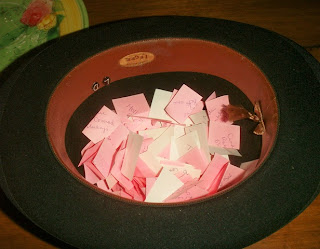
I, however, choose my opinions scientifically...


Rare indeed is the tabula rasa of politics who gathered objective information before holding a belief.  The best most of us can hope for is an open-minded perusal of the other side’s partisan venom.  Unfortunately, most of the info on both sides is slanted and biased, so it’s pretty easy to dismiss the claims of our political rivals.  Of course, but for confirmation bias, it would be just as easy to dismiss most of the reports from our side of the fence as well.

The end result is that very often you will find yourself arguing with Keith Olbermann or Glenn Beck via your coworker.  Once they’re done telling you what Keith or Glenn thinks they are out of ammo.  But their opinion is based solely on the one provided by said partisan pundit and is backed up only by the information that said pundit offered.  If any or all of this information is incorrect or out of context it is pointless to draw attention to it because neither Glenn nor Keith are there to answer back.

 #7) We are intractable
 
When is the last time you were in a political discussion in which you were freely willing to be swayed?  Generally speaking, those of us passionate enough to argue about politics are only passionate enough to do so about subjects that we feel strongly about.  Obviously if you’ve gone to the trouble of developing expertise about tax policy, you’ve formulated a very strong opinion about it. 

Firmly entrenched in the the
pro-cookie side of the debate.


We do not get into political arguments with the intent of changing our opinions.  We might fool ourselves into thinking we do it with hopes of swaying the other guy, but in truth it is more often in hopes of demonstrating how absurd the opposing view point is.  We use our biased facts to argue with our fictional opponent, tearing down straw man after straw man until we’ve managed to cement another brick in the impenatrable fortress of our existing opinions.

This is not to say there is no value in debate.  Two informed and uncompromising individuals taking part in an Oxford style debate is a fantastic way for the rest of us to try to glean the truth in the middle, but you will never see an Oxford style debate end with both sides reconciling.

 #8) We actually agree

We need all of these nonsensical mechanisms to maintain the existing political climate.  There are really very few issues that divide us as a nation.  The majority agrees on almost everything and usually by a pretty healthy margin.  If we made any attempt to frame the debate in a realistic manner we would certainly find that we agreed on more than we disagreed on.

"LESS FILLING!!!!"


On the subject of environmental advocacy, for example, there aren’t many people in the “screw the planet” camp.  The overwhelming majority of Americans (and earthlings for that matter) agree that we should seek better ecological balance.  The overwhelming majority agree that we should focus on finding renewable sources of energy.  The overwhelming majority agree that we should limit our pollution and find ways of using fewer non-biodegradable items.  And yet whenever legislation appears to address these issues we find the minute details that divide us and amplify them into insurmountable obstacles.

If you were to force Rush Limbaugh and Michael Moore into a room together (with a generous buffet, of course) you would find that on 99% of subjects they were in complete agreement.  After all, we are all using the same logic, we’re building it from the same fact set and we all want the same outcome.  Partisanship is a tool used to manipulate the masses and allow us to demonize one another.  The antidote is simple rationality.  Recognizing the inherent humanity in humans should be easy but the present media climate makes it increasingly difficult.

The greatest threat to America doesn’t come from conservatives or liberals.  It doesn’t even come from the hyper-partisan pundits.  Debate is essential to a functioning democracy and the nemesis of debate is obduracy (how 'bout that word-a-day calendar?).

In my opinion, intransigence is the real enemy and nothing you say will convince me otherwise.

Aaron Davies

That last sentence was just linguistic irony.  If you disagree or would like to add to the discussion, please leave a comment below!

Sunday, September 5, 2010

How can I see past the talking points?


            A few nights ago, as I was lying in bed watching two talking heads blather back and forth on CNN, an analogy occurred to me that would doom me to several restless hours.  The human mind is an incredible contraption, capable of contemplating the cosmos from the confines of a couch or measuring the tiniest particle.  In fact, only one thing is complex and baffling enough to confound the intellect of the homo sapiens sapiens.  I speak, of course, of the Magic-Eye.
This one's a... um, let's say fish...
            I’m sure you’re familiar with them.  These seemingly random assortments of computer-produced dots are technically called “stereograms”.  The concept is that as you relax your eyes and look beyond the page, a three dimensional image appears out of the chaos.  Or so I’m told.
            I make this admission candidly because I’ve lied about my Magic-Eye deficiencies for decades.  Never one to admit that there was something I couldn’t do, I hid this handicap deep in the closet. Even now my parents might be shocked to learn of it.  As a child, I would look at the images and relax my eyes until they nearly touched my feet, but still, I saw only the dots.
            “Do you see it?” my father would ask.
            “Cool,” I would remark in feigned amazement.
            “It’s a sailboat,” he would say.
            “That’s awesome,” I would lie.
            I must have been awfully convincing because for years afterwards he would send me the stereograms from the hometown newspaper and buy me Magic-Eye calendars for Christmas.  Before I hung them, I would cheat and look at the back page, carefully memorizing what each splotch was supposed to be in case a friend saw it.
            “It’s a racecar,” I would say as they stared at my dorm room wall.
            “Oh, I see,” they would respond with a nod of appreciation.  And I would wonder.
            All of this occurred to me as I watched a cable-news debate over the financial crisis.  The sound was on, but I could just as well have filled in the debate with the voices muted.  The republican was recognizable by his gray hair and a sports coat stretched over just enough gut to evoke the empathy of the “average guy”.  The democratic pundit was identifiable by being both female and not Sarah Palin.  Anderson Cooper moderated as they took turns blaming one another for the crisis in the housing market.
            “It’s the fault of the Democrats,” insisted the conservative, “The liberal housing programs enacted by Clinton armed a ticking time-bomb that set the stage for an inevitable collapse.”
            He was right, I realized.  I remember those high-minded speeches about lifting oneself out of poverty through home ownership.  I remember the push to make mortgages available to those with low-incomes.  It seemed so logical and benevolent in a time of economic expansion, but I saw instantly how this could lay the groundwork for catastrophe.
            “It’s the fault of the Republicans,” insisted the liberal, “The era of deregulation under the Bush administration left banking laws so lax that there was no culpability for making bad loans.”
            She was right, I realized.  I remember those high-minded (if occasionally mispronounced) speeches about lifting the economy from the burdensome weight of big government.  I remember the push to make loans easier to acquire for small businesses and individuals.  It seemed so logical in a time of skyrocketing stock values, but I saw instantly how this could ignite the powder keg.
            A few more revelations followed, swinging the pendulum from Anne Coulter to Michael Moore and back again.  Both of them sounded so right and they both used such brilliantly cherry-picked facts and such carefully worded ambiguity.  For an instant I was so confused that I thought I was oscillating between two parallel universes of responsibility but the sound of my wife tilling her digital fields anchored me to reality.
            And that’s when I thought of the Magic-Eye.  I realized that perhaps all I was seeing were the dots.
   I relaxed my eyes.
            As I did, the three-dimensional object slowly started to come into focus.  The liberal talking points and the conservative ones started to coalesce and for a moment it seemed like somewhere beyond the dots there was a world where there were no Republicans or Democrats.  In their place was an infinite array of individuals who fell across the scale from liberal to conservative in the same way people fell across the scale from tall to short.  Meanwhile, the talking heads had moved on to blaming one another for the federal deficit and the dots started to fill in once again.
            As this elusive epiphany faded I found myself once more pondering the mind, though this time I thought more of its limits than its expanses.  After all, a single mind could be thwarted by something as innocuous as a stereogram or a UFO video on You-Tube.  However, as I reckon it, there is only one thing potent enough to thwart the collective minds of all of humankind.  That would be, of course, the collective minds of all of humankind.
            Such an opposition could scarcely be imagined.  The only way it could be achieved would be by creating such a brazenly nonsensical dichotomy that people would be left unable to believe in climate change because of their position on gay marriage.  People would be forced to say things like “To hell with repealing estate taxes, I’m a vegetarian” or “I can’t carry a Nalgene bottle… I’m a Republican.”
            And again I thought of the Magic Eye.
            We are all right eyed or left eyed in the same way that we are right or left handed.  Nobody seems to know why some people can’t see the three dimensional object, but for no reason but the congruity of my analogy, I like to believe that it’s because people like myself are just not ambi-ocular enough to see beyond the points.  If you see out of only your left eye, you see only the points on the left side.
Here, Bill is seen being fair and balanced.
            The fear, of course, is that we all risk blinding one eye by spending too much time in the echo chambers of Oberman and O’Reily.  Whether it’s listening to Keith interview people that could not agree with him more or Bill shouting over someone that couldn’t be less qualified to articulate the opposition, we risk cultivating a world where everyone sees the dots and nobody sees the picture.  When a drilling platform explodes and untold environmental devastation results, our nation risks foregoing a realistic dialogue about the causes and methods of preventing similar disasters in the future.  Instead, the pundits find a way to press these facts into their established talking points and line up like pawns on a chessboard to have the same tired, futile debates.
            I bring all of this up because I have no intention of writing a politically biased blog.  There are enough of those in the world and I am not informed enough to add much to the ubiquitous rancor.  Despite that, it would be unrealistic to think that one could opine on the events around them without delving into topics that might serve as political firebrands.  In the present political climate, one can’t say that they disagree with the suspension of habeas corpus without earning some accusations of partisanship.  My hope is that as I touch on these subjects, I can do so in such a way as not to scare away the people who stand on the opposite political sideline.
            But I can only promise that I will relax my eyes.  I will try to look beyond the party rhetoric, though I make no promises that I will succeed.  When I see the talking points, I will strain to find the truth they hide, but I do so knowing that I am restricted by my shortcomings: I have still never seen the sailboat.